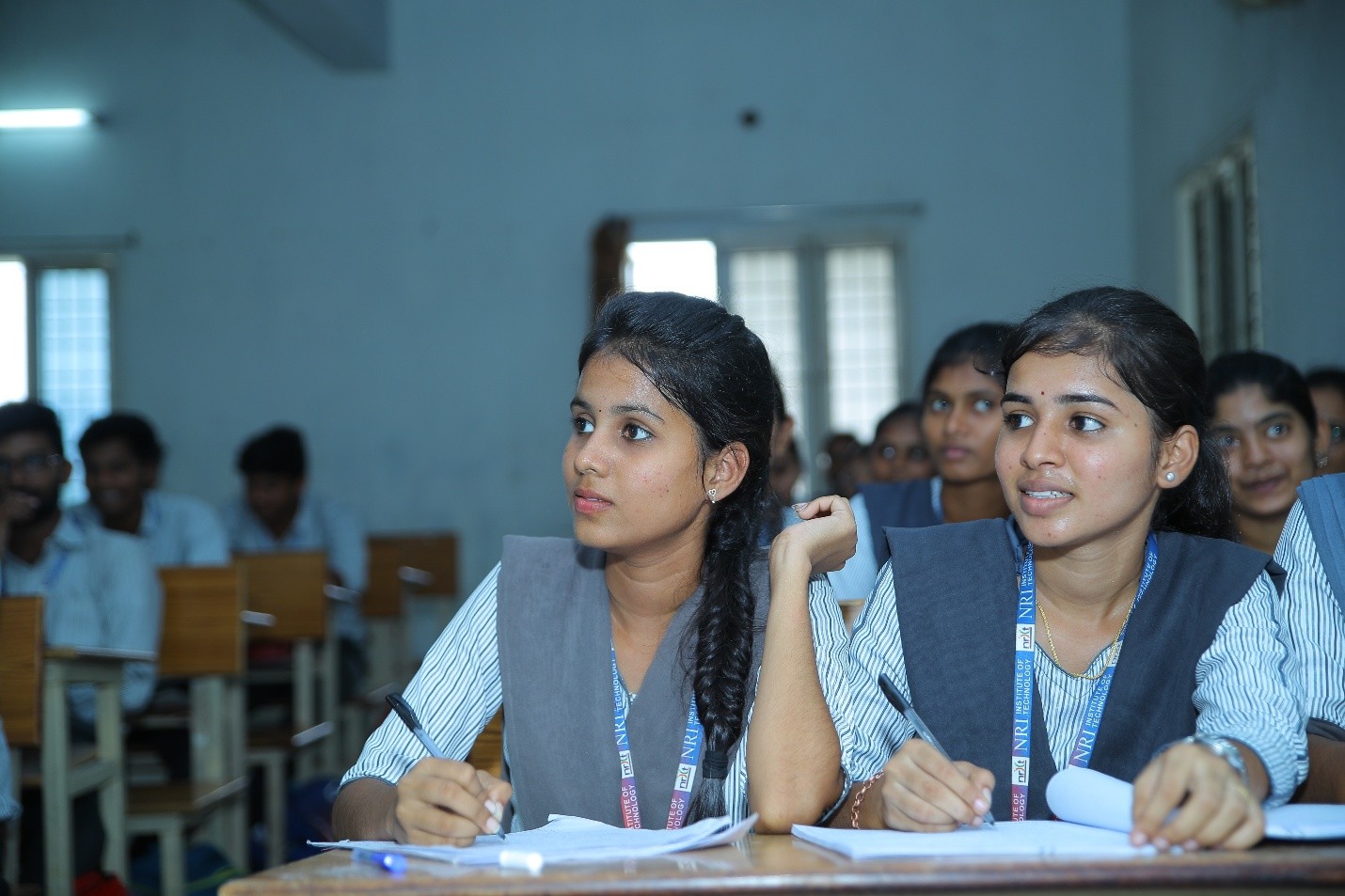
MATHEMATICS
Engineering mathematics is the art of applying maths to complex real-world problems; combining mathematical theory, practical engineering and scientific computing to address today’s technological challenges.
Technical skills
All Engineering Mathematics degrees are built on five key themes which cover theoretical and practical aspects of the application of mathematics. They run throughout the programmer, developing technical skills in each area as you progress, reaching the frontiers of current research in the fourth year of our MEng degrees
Mathematical modelling
The flagship theme of the Engineering Mathematics degree. You'll apply all the skills from the rest of the programme to solve real world problems, working individually or in groups. The case study problems are up-to-the-minute, span a huge range of discipline areas, and are derived from current research, industry and business.
Mathematics
Core mathematics is an inherent part of our degree programmes, and the type of mathematics you'll study is incredibly varied. First year mathematics units bridge the gap between school and university mathematics. By your final year, many units are motivated by our research interests and will take you to the frontiers of the subject. You'll learn a unique blend of continuous and discrete mathematics, enabling you to understand the underlying structure of an extraordinarily wide range of applications.
Scientific computing
Computing is crucial for applying mathematics in the real-world. Unlike in text books, many problems at the cutting edge of science and engineering do not result in equations with nice analytical solutions. So you'll use computers to find approximate numerical solutions. We'll teach you the programming skills needed to complement your other technical skills.
Engineering
You'll gain an excellent background in general engineering so that you can really engage with practical problems, as well as learning the language of engineering. You'll have the chance to experience courses across the Faculty, including dynamics and control, thermodynamics, fluids, space systems, cryptography and sustainability.
Data science and machine learning
Being able to analyse big data is nowadays a fundamental skill. We will provide you with strong statistical foundations and specialistic knowledge of the most effective machine learning techniques to address the challenges of data analysis across scales and applications.
DEPARTMENT OF MATHEMATICS - VISION & MISSION
VISION
• We envision our students as excellent engineers, not only in the field of science and technology, but also in good citizenship and discipline.
• Our commitment lies in producing comprehensive knowledge seekers and humane individuals, capable of building a strong and developed nation.
MISSION
• To achieve the vision we should have diligent faculty who use effective teaching methodologies. To impart updated technical education and knowledge.
• To groom our young students to become professionally and morally sound engineers.
• To reach global standards in production and value based living through an honest and scientific approach
FACULTY
| S.No | Name of faculty | Qualification | Designation | Total Experience (Year) | Mobile No | Email Id | |
|---|---|---|---|---|---|---|---|
| 1 | K.Srinivasa Rao | M.Sc,P.hd | ASSOCIATIVE PROFESSOR | 25 | 9491337527 | nivaspremk@gmail.com | view |
| 2 | Sridevi Kumari | M. Sc,P.hd | ASSOCIATIVE PROFESSOR | 21 | 9490642678 | gsreedevikumari@gmail.com | view |
| 3 | D.Vinoda | M. Sc,M.Phil | ASSISTANT PROFESSOR | 17 | 9603543038 | vinoda038@gmail.com | view |
| 4 | G. Suesh babu | M. Sc | ASSOCIATIVE PROFESSOR | 17 | 9666756756 | Sureshgottipati18@gmail.com | view |
| 5 | Y.Rajya lakshmi | M.Sc | ASSISTANT PROFESSOR | 4 | 9491337170 | rajiyarram@gmail.com | view |
| 6 | Pravathi Kanakadurga Tadepalli | M.Sc | ASSISTANT PROFESSOR | 1 | 9100243833 | Durga.tadepalli4@gmail.com | view |
| 7 | Veesam Sandhya Rani | M.sc | ASSISTANT PROFESSOR | 2 | 9381067332 | veesamsandya@gmail.com | view |
| 8 | J Sunil Gowtham | M.Sc | ASSISTANT PROFESSOR | 5 | 8099153264 | Sunil.gowtham752@gmail.com | view |
| 9 | CH.Dhana lakshmi | M.Sc | ASSISTANT PROFESSOR | 1 | 9640524533 | Chennupatidhanalakshmi678@gmai.com | view |
| 10 | Miriyala Kalyani | M.Sc | ASSISTANT PROFESSOR | 2 | 9866003310 | kalyanimiriyala23@gmail.com | view |
| 11 | Jonnalagadda Rajasree | M.Sc | ASSISTANT PROFESSOR | 5 | 9553412235 | ravibabuamire@gmail.com | view.. |
ACTIVITIES
Aptitude & Technical Skills
| Sl.No | Name of the program | Data | Venue |
|---|---|---|---|
| 1 | Communication Skills | All the year Students | Respective Class Rooms |
An aptitude may be physical or mental. Aptitude is inborn potential to do certain kinds of work whether developed or undeveloped. Ability is developed knowledge, understanding, learned or acquired abilities (skills) or attitude.
1.Big Data Analysis. Nearly every industry today relies on data, whether it is data about their clients or the success of their product.
2.Coding and Programming
3.Project Management.
4.Social Media Experience
5.Technical Writing.
Improve Your Technical Skills:
1. Read technical books. One of the best ways to improve your technical skills is by reading books.
2. Read online tutorials.
3. Hang out with geeks.
4 Subscribe to technical magazines.
5 Take classes.
6 Create your own web site.
7 Build your own PC.
8 Embrace a variety of software.
| Sl.No | Name of the program | Data | Venue |
|---|---|---|---|
| 1 | Technical Skills | All the year Students | Respective Class Rooms |
Summary Report Communication Skills
1. Excellent written and verbal communication skills.
2. Confident, articulate and professional speaking abilities (and experience)
3. Empathic listener and persuasive speaker.
4. Writing creative or factual.
5. Speaking in public, to groups, or via electronic media.
6. Excellent presentation and negotiation skills.
Communication skills the hiring manager will be evaluating:
1. Listening.
2. Confidence.
3. Empathy.
4. Friendliness (are you easy to talk to?)
5. Nonverbal communication (do you appear to be stressed or uncomfortable?)
6. Respect.
7. How clear and concise your responses.
Communication skills are also a main role for self-confidence. Communication is like conveying our messages to other people with clarity and obviously. Through communications, we can share our ideas and think throughout the country. If our communication is poor, it will do not reflect our thoughts and ideas what we really think.Across these qualities, love is one of the things that binds us each other. Love opens the main gates and it is the gate to all secrets of the universe. Everything can be gained in love across the world. A group of various main qualities those are faith, commitment, hard work, courage, communication skills and love these all things will lead to self-confidence. It is easy to obtain and self-confidence is easy to learn and develop yourself.
| Sl.No | Name of the program | Data | Venue |
|---|---|---|---|
| 1 | Soft Skills | All the year Students | Respective Class Rooms |
Summary Report Soft Skills:
Soft skills are a combination of people skills, social skills, communication skills, character or personality traits, attitudes, career attributes, social intelligence and emotional intelligence quotients, among others, that enable people to navigate their environment, work well with others, perform welland achieve. Soft skills' are skills that are desired by employers but are not job-specific. Learn more about the most important soft skills and how to develop them.Soft skills are character traits and interpersonal skills that characterize a person's relationships with other people. In the workplace, soft skills are considered to be a complement to hard skills, which refer to a person's knowledge and occupational skills.
The term soft skill refers to the personal traits, characteristics and competencies that inform to how an individual relates to others. One reason soft skills are so revered is that they help facilitate human connections. “Soft skills are key to building relationships, gaining visibility and creating. Soft skills are the set of behaviors and personality traits you use every day. Highlighting and developing strong soft skills can help you in the job search process.
Definition of soft skill:
Communicating, conflict management, human relations, making presentations, negotiating, team building, and other such ability, during conversations with customers and co-workers, getting and receiving messages from one another is essential to resolving concerns and in general getting things done. Understanding what soft skills are and how to use them is key.
| Sl.No | Name of the program | Data | Venue |
|---|---|---|---|
| 1 | JUST A MINUTE (JAM) | All the year Students | Respective Class Rooms |
JUST A MINUTE (JAM)
JAM is the acronym of the JUST A MINUTE. It is the one of the Round in some interviews. The jam session is organized by the Company recruitment board for the candidates those who have attended for the Job interview. By arranging the JAM SESSION, Interviewers will have the chance to check the Talent and some of the skills of the Candidates. The interviewer will check the applicant’s skills, to test all the skills of the applicant JUST A MINUTE ROUND will be organized. Sometimes an interviewer will give you the JAM TOPIC and some other time interviewer will give a chance to select your own JAM Topic to talk in the JAM Session. Here are the just a minute topics latest, Choose any one from latest topics for just a minute round and give your best in jam just a minute session.
• General Knowledge
• Self-confidence
• Communication skills
• Spoken English & fluency
• The flow of thoughts & also the speech.
• Spontaneity
• Time management
• Sense of Humour
| Sl.No | Name of the program | Data | Venue |
|---|---|---|---|
| 1 | Group Discussion | All the year Students | Respective Class Rooms |
Group Discussion:
Group discussion refers to a communicative situation that allows its participants to share their views and opinions with other participants. It is a systematic exchange of information, views and opinions about a topic, problem, issue or situation among the members of a group who share some common objectives.
Please go through some crucial group discussion skills below to craft your very own GD strategy accordingly.
• Reasoning. Try to find the GD topic category that you are comfortable with.
• Speaking.
• Time Management.
• Presentation.
• Paraphrasing/summarizing.
• Creativity.
• Listening.
• Proactive.
• Train yourself to be a good listener.
• Acknowledge that everyone has something valuable to say.
• When speaking in a GD, your job is to articulate your point of view in a way that is easy for others to comprehend.
• Inculcate the good habit of structuring your thoughts and presenting them logically.
"Discussion" is the process whereby two or more people exchange information or ideas in a face-to-face situation to achieve a goal. It is a systematic exchange of information, views and opinions about a topic, problem, issue or situation among the members of a group who share some common objectives.
| Sl.No | Name of the program | Data | Venue |
|---|---|---|---|
| 1 | QUIZ | All the year Students | Respective Class Rooms |
Summary Report Quiz:
A quiz can function throughout a course as an informative feedback device allowing both the instructor and the students to see where they are excelling or need more focus. In order to effectively create exams and quizzes, it is important to establish and understand the learning objectives that are being measured.
A quiz is a form of game or mind sport, in which the players (as individuals or in teams) attempt to answer questions correctly. It is a game to test your knowledge about a certain subject. In some countries, a quiz is also a brief assessment used in education and similar fields to measure growth in knowledge, abilities, and/or skills.
Quizzes are usually scored in points and many quizzes are designed to determine a winner from a group of participants – usually the participant with the highest score. They may also involve eliminating those who get too many questions wrong, the winner being the last man standing. Quizzes may be held on a variety of subjects (general knowledge or 'pot luck' (which could be anything)) or subject-specific. The format of the quiz can also vary. Popularly known competition quizzes include • Pub quizzes • Quiz bowl In an educational context, a quiz is usually a form of a student assessment, but often has fewer questions of lesser difficulty and requires less time for completion than a test.
| Sl.No | Name of the program | Data | Venue |
|---|---|---|---|
| 1 | Debate | All the year Students | Respective Class Rooms |
Summary Report Debate:
Debate is a process that involves formal discussion on a particular topic. In a debate, opposing arguments are put forward to argue for opposing viewpoints. Debate occurs in public meetings, academic institutions, and legislative assemblies. It is a formal type of discussion, often with a moderator and an audience, in addition to the debate participants.
Logical consistency, factual accuracy and some degree of emotional appeal to the audience are elements in debating, where one side often prevails over the other party by presenting a superior "context" or framework of the issue. In a formal debating contest, there are rules for participants to discuss and decide on differences, within a framework defining how they will do it. Debating is carried out in debating chambers and assemblies of various types to discuss matters and to make resolutions about action to be taken, often by voting. Deliberative bodies such as parliaments, legislative assemblies, and meetings of all sorts engage in debates. In particular, in parliamentary democracies a legislature debates and decides on new laws. Formal debates between candidates for elected office, such as the leader’s debates, are sometimes held in democracies. Debating is also carried out for educational and recreational purposes, usually associated with educational establishments and debating societies.